





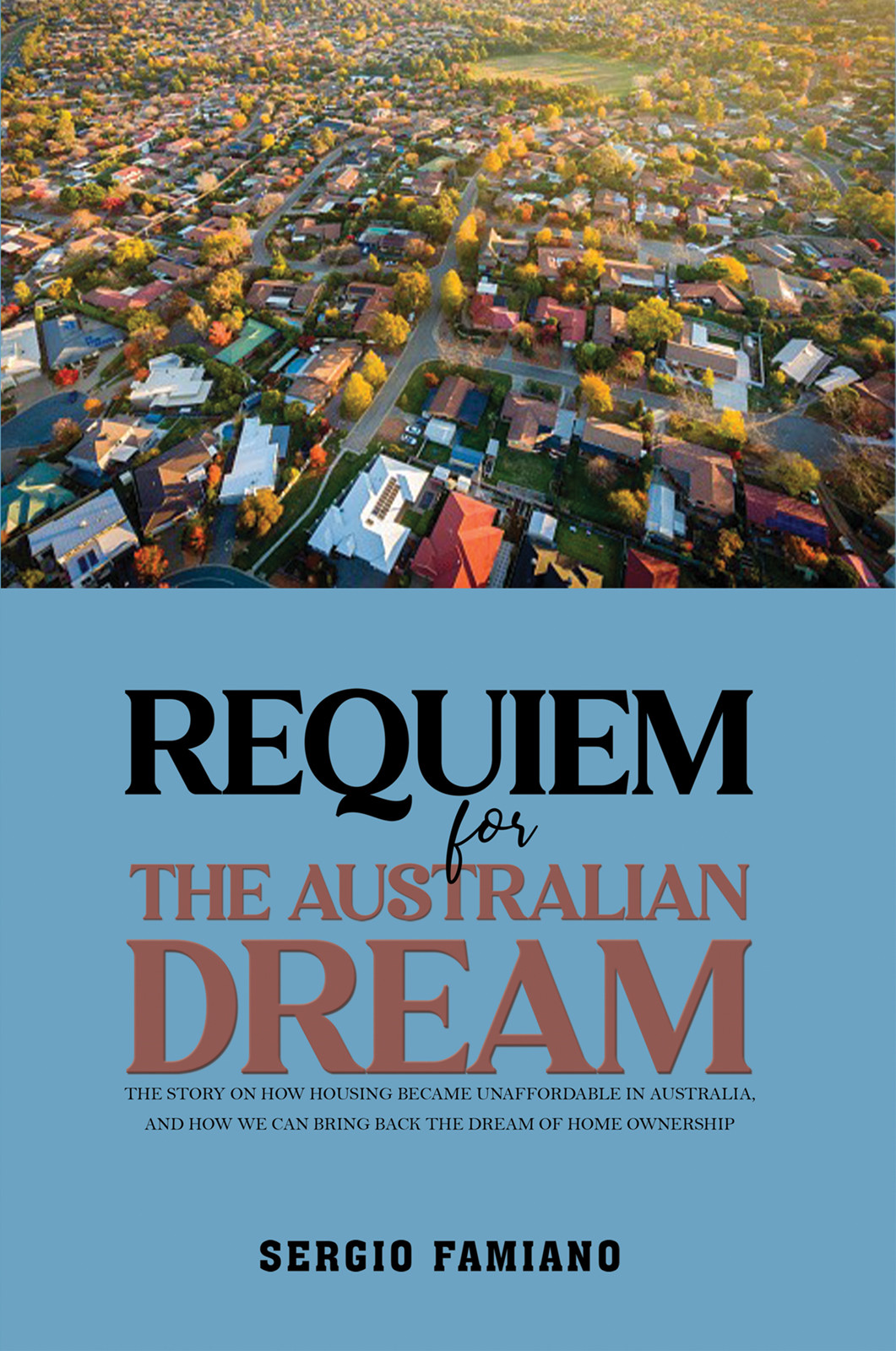


‘Requiem for the Australian Dream’ examines the origins of the Australian Dream and its importance to Australian society. Under the Robert Menzies government, the ‘Australian Dream’ became the measure of a mature society, built on the collective values of the ‘fair go’ and the notion that no one will be left behind. Menzies likened it to ‘the greatest expression of democracy is when a man and his family own their own home’. During his tenure as Prime Minister from 1949 to 1966, home ownership would become the cornerstone of his ‘emerging middle class of ‘little capitalists’. He believed if Australians were happy and content, they would not stray to communism, which was gripping the world at the time. At just 50.3% in 1945, home ownership would peak in 1966 at a staggering 72%. The book examines the economic and political factors which made home ownership obtainable in Australia during this ‘golden era’ and then what happened to turn the dream into a nightmare.
From the turbulent 1970s to the 1990s – the final years when housing was affordable in Australia – the book takes you on a journey that identifies the key political, economic and societal decisions which conspire to end the Australian Dream of home ownership for so many. Starting with the Whitlam years and moving to the Hawke, Keating and Howard prime ministerships, we witness the rise of neoliberalism and globalisation and their erosion of wages and employment stability for the majority. Labour reforms, the rise of negative gearing, and the deregulation of the banking industry will all play a role in turning the dream. Other monumental changes, such as Howard’s capital gains reform, will be examined, particularly when combined with negative gearing, which would supercharge property investment from 2000 onwards.
The 2000s, which promised to be a period of safety and stability with the ‘Cold War’ at an end, would prove to be a powder keg of conflict and uncertainty that would drive government decisions and economic policy that would turn against housing affordability. Existential factors such as the September 11 attacks, the war on terror and the global financial crisis and their influence on monetary policy in Australia would create ‘cheap credit’ that would incentivise a property boom that would last for 23 years. The rise of China and immigration into Australia would put pressure on town planning and housing supply, which would fuel property price growth. The 1-in-100-year event of COVID-19 would prove to be the last nail in the coffin for the crisis, causing an unparalleled rise in the cost of housing construction, resulting in a reduced housing supply and record bankruptcy of builders. Collectively these factors, combined with political blunders, would define the crisis that we have today.
The final chapters will examine 8 key initiatives to solve the housing crisis and how housing affordability and the dream of home ownership can be restored to future generations. We reflect on what Australia looks like in 2050 if the crisis continues and examine the importance of home ownership to the future of Australia’s society and democracy. A must-read if you are interested in the housing issue.
